
Biodiversity Net Gain
All planning applications in England are required to meet the statutory 10% net gain, unless the development is exempt*.
Your Local Planning Authority (LPA) will require a Biodiversity Net Gain (BNG) assessment to have been completed before they will approve a planning application.
Your planning submission must therefore include the following documents:
–

BNG Metric

Condition Assessment Spreadsheet
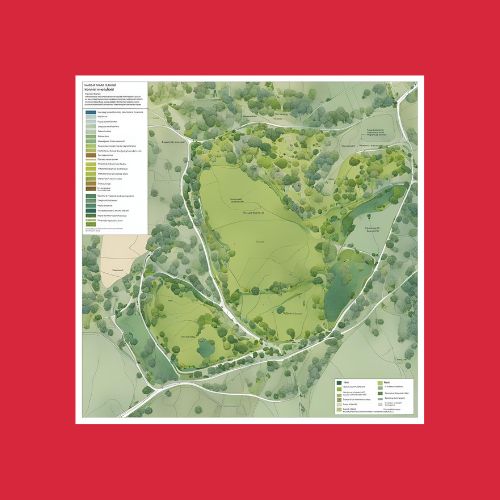
Baseline Habitat Map (PDF)
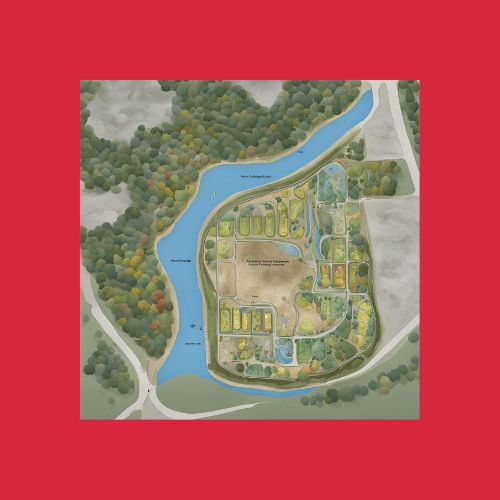
Proposed Habitat Map (PDF)

Biodiversity Gain Plan (BGP)
The above documents must be informed by a Habitat Condition Assessment (HCA), a field survey of all habitats that will be impacted by the proposal, including any onsite or offsite habitats.
Finally, once the planning application has been approved, the LPA will condition a Habitat Management and Maintenance Plan (HMMP). This is a complex document that requires good project knowledge and input from the client and other disciplines.
*List of notable Biodiversity Net Gain (BNG) exemptions
Existing planning applications
If a planning application for a development was made before day one of mandatory BNG on 12 February 2024, the development is exempt from BNG.
Developments below the threshold
A development that does not impact a priority habitat and impacts less than:
- 25 square metres (5m by 5m) of on-site habitat
- 5 metres of on-site linear habitats such as hedgerows
A development ‘impacts’ a habitat if it decreases biodiversity value
Householder applications
These are applications made by householders as defined within article 2(1) of the Town and Country Planning (Development Management Procedure) (England) Order 2015.
It includes, for example, small projects like home extensions, conservatories or loft conversions.
Self-build and custom build applications
You must meet all of the following conditions to qualify for an exemption as a self-build or custom build.
The development must:
- consist of no more than 9 dwellings
- be on a site that has an area no larger than 0.5 hectares
- consist exclusively of dwellings that are self-build or custom housebuilding as defined in section 1(A1) of the Self-build and Custom Housebuilding Act 2015
FAQs about Biodiversity Net Gain (BNG)
Why do we need all these documents (BNG Metric, habitat maps, and Biodiversity Gain Plan)?
These documents are statutory requirements for planning submissions in England under the Biodiversity Net Gain regulations. They ensure that the proposed development demonstrates compliance with the mandatory 10% net gain in biodiversity. Local Planning Authorities (LPAs) require this evidence to assess and approve applications. Without these documents, planning applications are unlikely to proceed.
What is the BNG Metric, and why is it necessary?
The BNG Metric is a standardized tool developed by Natural England to calculate biodiversity value. It assesses the impact of a development on habitats and helps determine how to achieve a net gain. This ensures that developments contribute positively to biodiversity, either onsite or offsite, and is essential for compliance with planning regulations.
What is a Habitat Management and Maintenance Plan (HMMP), and when is it required?
The HMMP outlines how habitats created or enhanced as part of the Biodiversity Net Gain strategy will be managed and maintained over the long term. It is typically required as a condition of planning approval and ensures that the net gain objectives are achieved and sustained. The plan includes specific actions, monitoring schedules, and responsibilities.
How do you determine whether a site qualifies for an exemption from BNG?
Exemptions apply to specific types of developments, such as householder applications (e.g., extensions), very small-scale impacts (under 25m² or 5m of hedgerows), and some self-build projects. If the development meets these criteria, it is exempt from BNG requirements. Our team can help verify this during initial discussions.
How long does it take to prepare the necessary BNG documents?
The timeframe depends on the complexity of the site and the project. For smaller, simpler sites, assessments and documentation can take a few days to a week. Larger or more complex sites requiring detailed fieldwork and mapping may take several weeks. Timelines will also depend on site access, weather conditions, and client input.
Can Biodiversity Net Gain be achieved entirely onsite?
This depends on the size of the site and the type of development. In some cases, 10% net gain can be achieved through habitat enhancements onsite. However, for space-constrained developments, offsite solutions or the use of habitat banks may be necessary. We can help assess the feasibility during the initial planning stage.
What are habitat banks, and how do they work?
Habitat banks are areas managed specifically to deliver biodiversity improvements. Developers can purchase biodiversity credits from these banks to meet their net gain obligations when it is not feasible to achieve the full 10% net gain onsite. These credits are tracked and verified to ensure compliance.
What is involved in a Habitat Condition Assessment (HCA)?
An HCA is a detailed survey of the habitats on the development site. It evaluates their current condition and biodiversity value, which forms the baseline for the BNG Metric calculation. The assessment includes field surveys conducted by trained ecologists and informs the planning submission documents.
Do we need post-planning support after the BNG documents are submitted?
Yes, in most cases. LPAs often require ongoing input to fulfill planning conditions, such as the creation of an HMMP. Post-planning support ensures that the agreed biodiversity commitments are implemented and managed effectively over time.
What happens if we fail to meet the 10% net gain requirement?
Failure to demonstrate a 10% net gain can lead to planning application delays or rejection. By working with experienced ecologists, you can ensure the right strategies are in place to achieve compliance, whether through onsite enhancements or offsite solutions.
How can we budget for BNG services?
BNG service costs vary depending on site complexity, the type of habitats affected, and the level of documentation required. During our initial consultation, we’ll provide a clear breakdown of costs, ensuring transparency. This includes field surveys, metric calculations, mapping, and report preparation.
What should we do if we are unsure about the habitats on the site?
Our team can perform an initial scoping visit to assess the site and identify key habitats. This step ensures we provide an accurate proposal and avoid unnecessary delays later in the process.