Water Vole Mitigation, River Frome
Client: Ramm Sanderson in conjunction with Galliford Try
Services: Water vole mitigation licence, Ecological Clerk of Works.
OVERVIEW:
Galliford Try were responsible for the installation of a new sewer upgrade in Stroud. The system was in a poor state of repair, leading to flooding and subsequent water pollution of the River Frome. The sewer upgrade would improve carrying capacity, resulting in cleaner water to benefit the habitats and local wildlife.
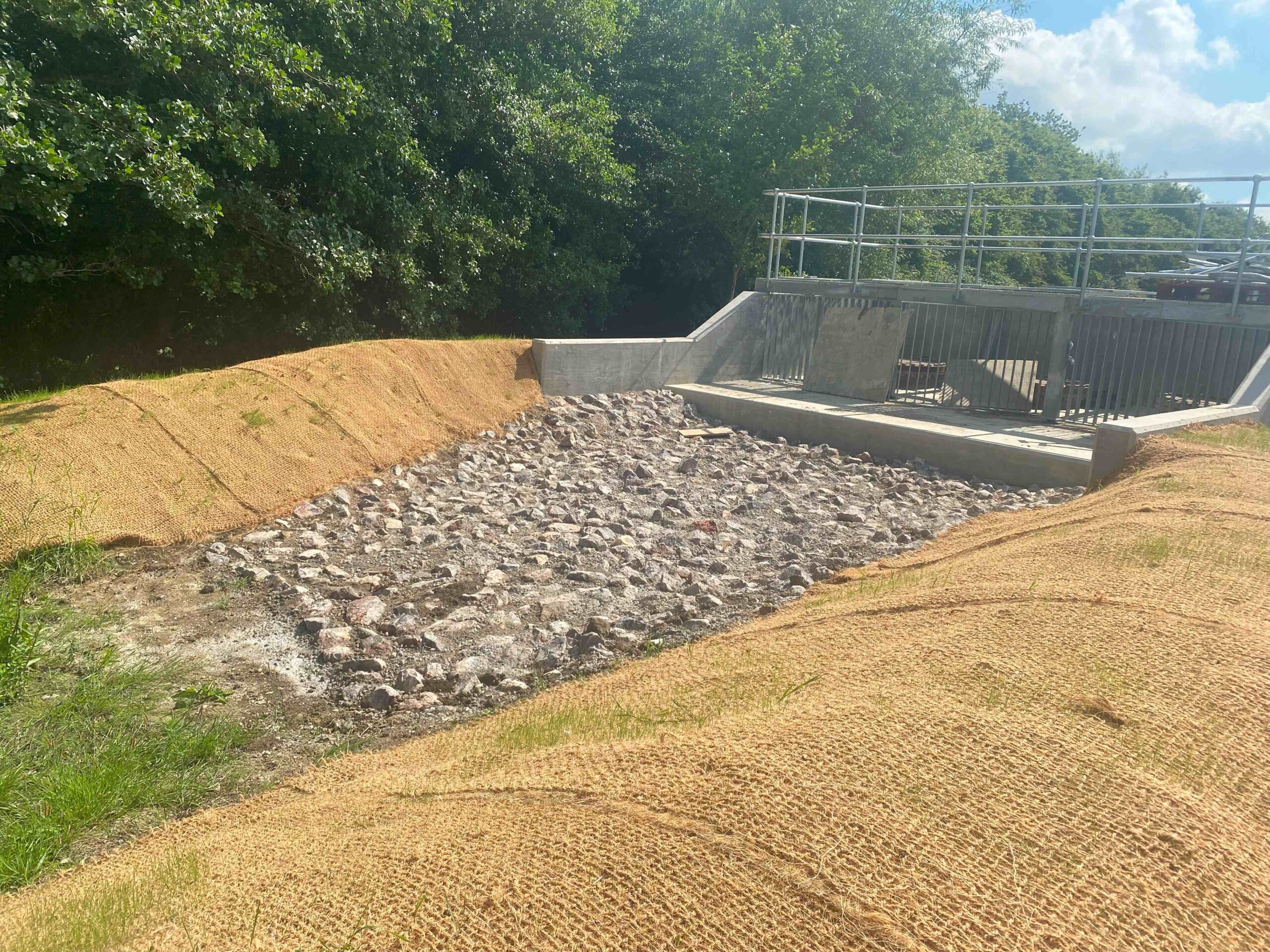
The works involved reprofiling part of the riverbanks, including a temporary diversion of the river channel, installation of a new gravity sewer across the river for flood management, as well as habitat reinstatement after the completion of the works.
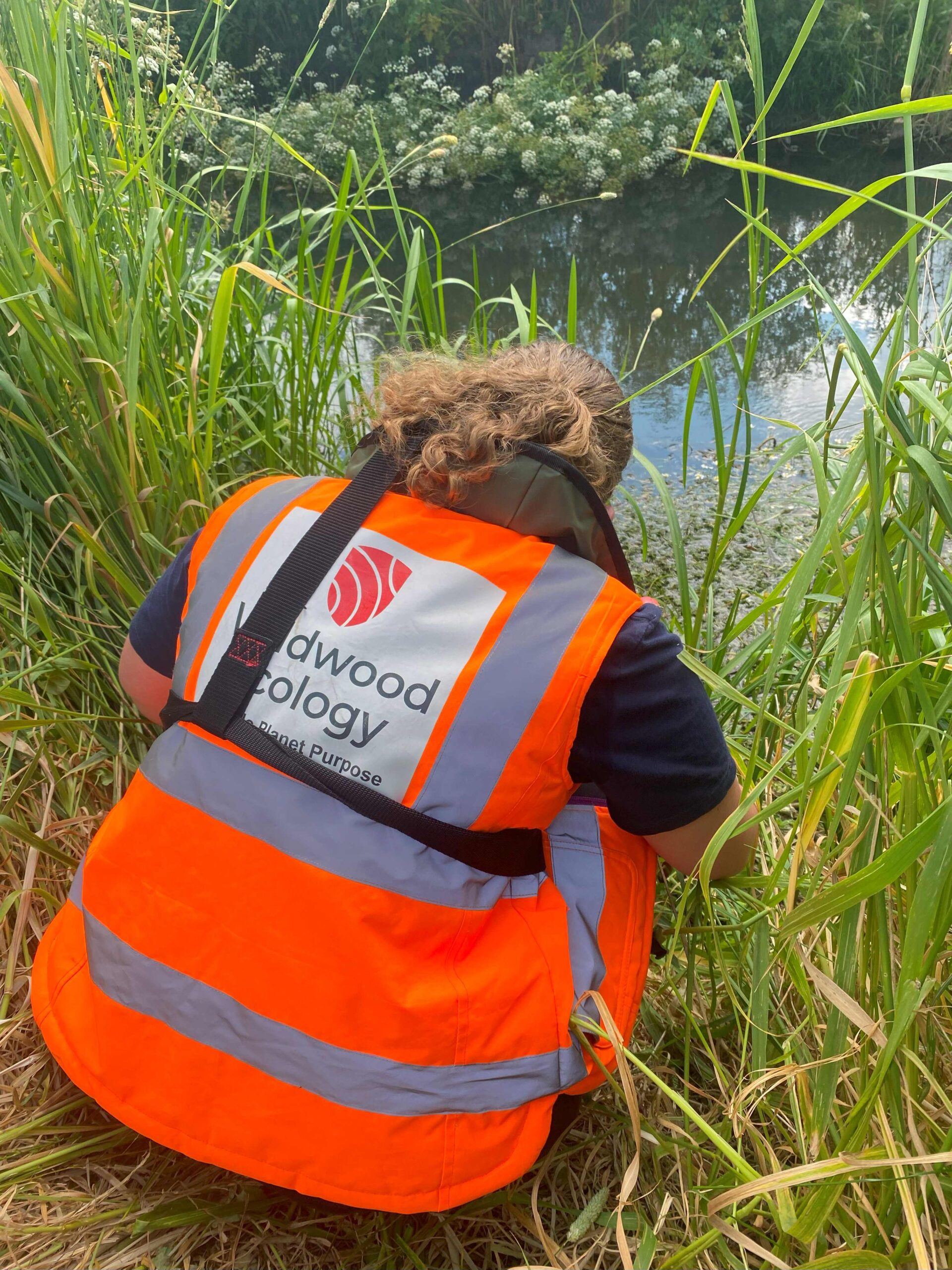
Wildwood became involved in the project after Ramm Sanderson had carried out the necessary preliminary and Phase 2 ecological surveys. It was reported that the stretch of river where the works were being carried out supported a water vole colony, with evidence of active burrows, feeding remains, and latrines. Wildwood’s expertise and the water vole licensed ecologist’s experience were required. The water voles would need to be temporarily displaced from the works area, to avoid killing or injury during the works.
CHALLENGE:
The main challenge was that this stretch of the River Frome was known to support not only a water vole population, but also salmonid fish; brown trout. It would be necessary to devise a timescale for works that would be appropriate to both species when attempting to reduce impacts.
The works could not commence until the autumn to avoid impacts on the fish population whereas the optimal time to carry out the works to avoid impacts on water vole would have been in early spring, when the population numbers are at their lowest. Collaboration between stakeholders, Natural England and the Environment Agency, and Galliford Try, resulted in an agreement that the licensable works would take place between agreed dates in September and October, to minimise impacts on breeding water vole and avoiding impacts on brown trout. This meant that there was a very short time window in which to complete the project.
APPROACH:
The Wildwood Ecology’s ecologist’s class licence to displace water vole by habitat manipulation could not be used on this project as the affected river stretch was longer than 50m, and the works had to be carried out in the autumn. Instead, Wildwood obtained a site-specific conservation licence from Natural England to enable the works but using the habitat manipulation methods to allow the displacement of water vole. This avoided the need for trapping, which is very expensive, time-consuming, and not optimal due to animal welfare concerns. Displacement was chosen as a method to facilitate a far better outcome for both water vole and the client.
Wildwood worked closely with Natural England and Environment Agency to agree a timescale that suited both species, so the sewer upgrade work could be caried out.
The river channel was temporarily diverted as scheduled. Mitigation involved cutting down vegetation to the ground, to ‘persuade’ water vole not to use that stretch of the river. By making the works area devoid of shelter and foraging opportunities, this pushed water vole out of the works area to retained offsite river habitat, amongst lush tall vegetation, immediately to the west of the works area.
Non-native species removal specialist removed some of the bankside vegetation as Himalayan balsam was present, and the remainder of the vegetation was strimmed and kept low by the Galliford Try team.
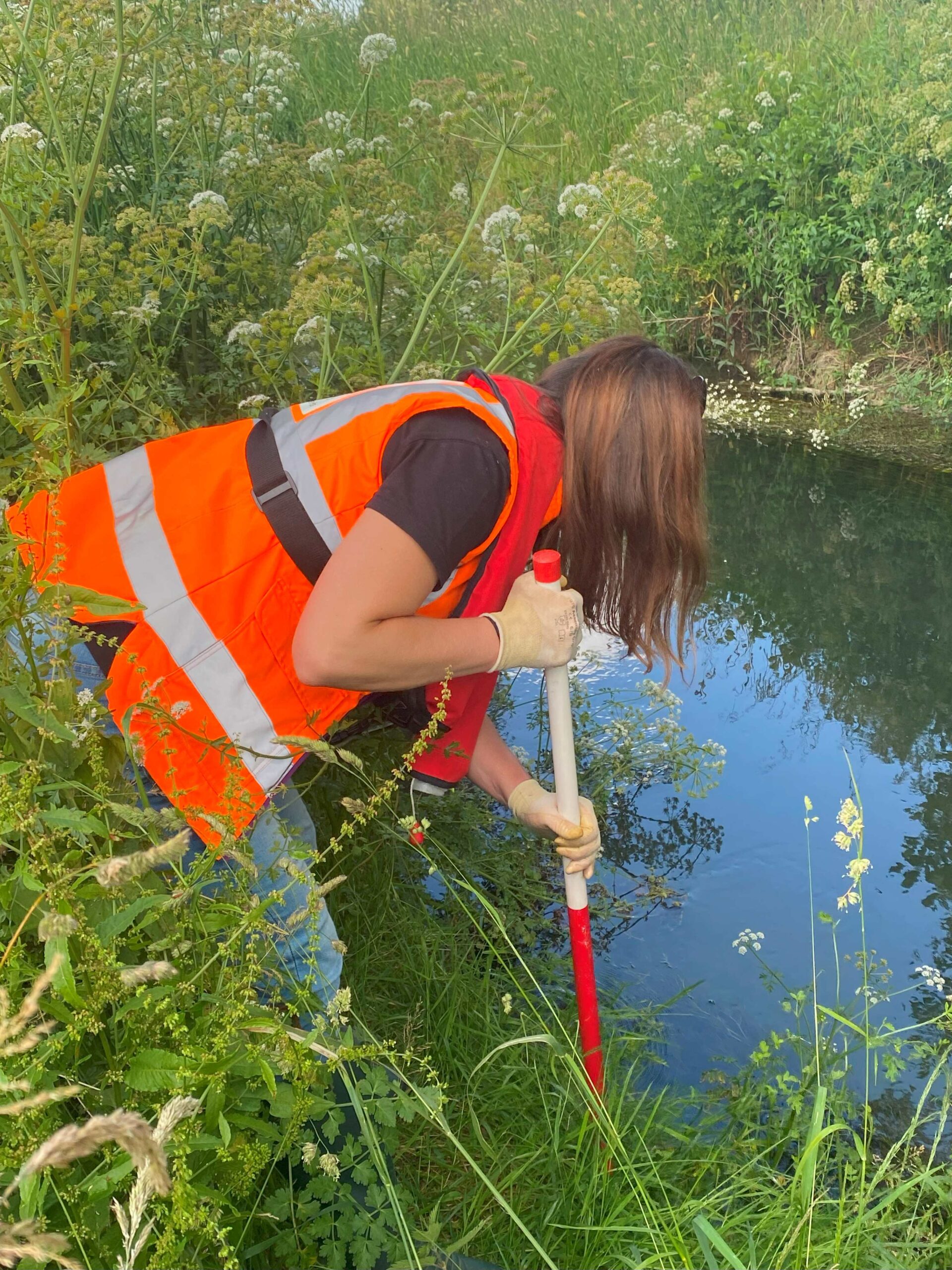
The burrows were marked out after the strim and monitored for a period of 10 days. Once the monitoring confirmed that there was no water vole activity on the affected stretch of the river, burrows on both banks were dug out by hand by contractors under supervision by ecologist, and an endoscope was used to check for animal activity. No water vole were found during this process, despite evidence of a large burrow complex on the north bank that was likely used during breeding.
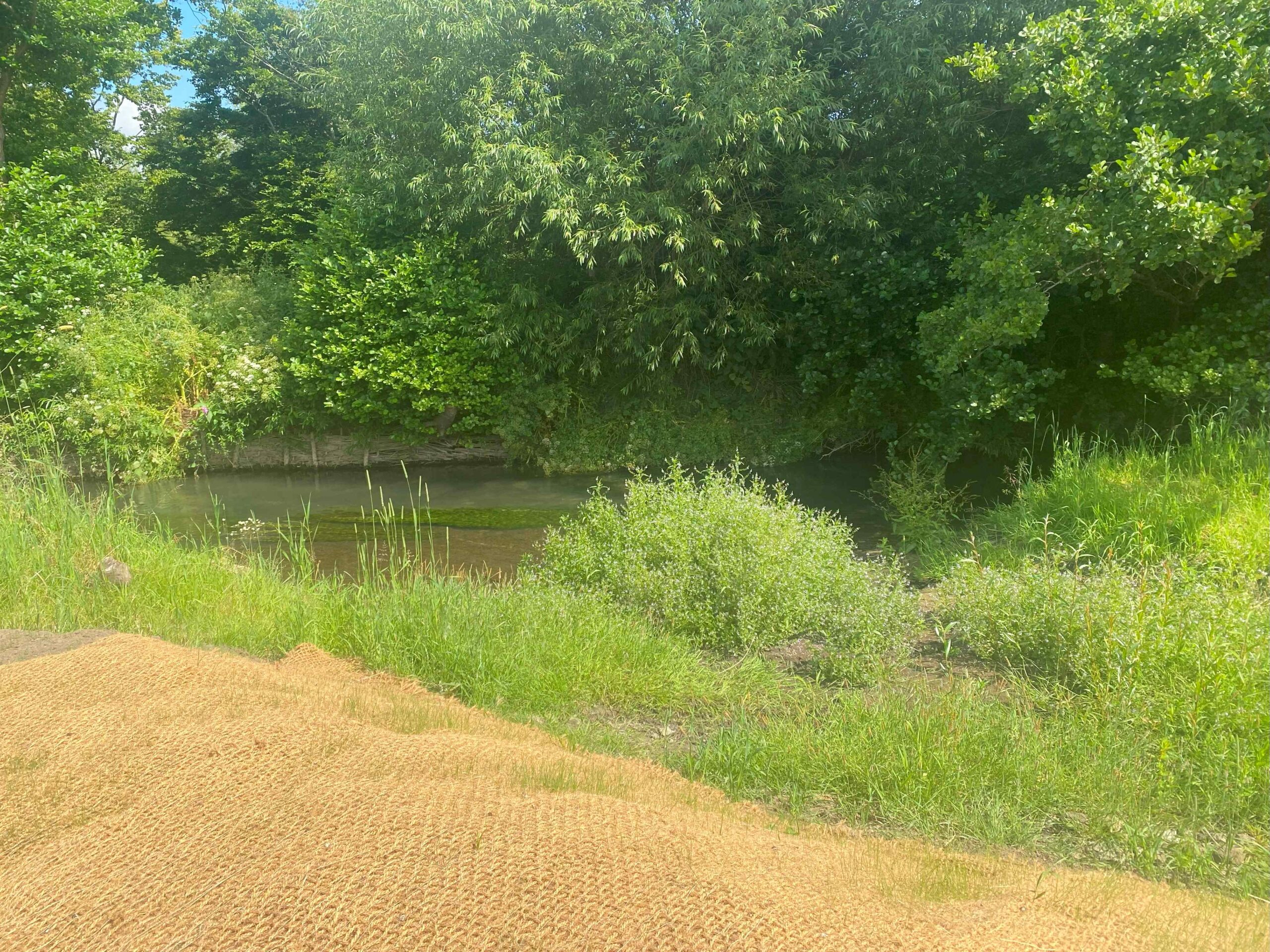
Once the water voles were displaced, and other species constraints were addressed by the RammSanderson ecology team (such as electrofishing), the sewer work could begin. After the completion of the sewer installation, the riverbanks were recreated, improving the gradient for water vole burrowing. The banks were reseeded with suitable water vole supportive plant species, providing good foraging opportunities, and cover for burrows, enhancing water vole protection from foxes or mink. Shrubs, hazel hurdles and coir-fibre matting with seeds were used where erosion protection was required and non-native invasive species, such as Himalayan balsam, will continue to be removed by a specialist contractor in case of re-growth.
Works were completed October 2024, when the river diversion channel was closed off, and the area was made accessible to water vole.
OUTCOME:
The result of Wildwood’s involvement was the successful protection of the water vole population along this stretch of the River Frome, whilst the essential sewer works were completed.
The methods used here were experimental as we tried to avoid the need for trapping, but significant to determine if they might be implemented on similar projects elsewhere. Ongoing monitoring is now being carried out and will continue at least for two years to determine the extent of the successful habitat establishment and maintenance of the water vole population.
Initial visit during the first spring after the works’ completion indicates that new burrows have already been established in the soft soil of the south bank, and extensive chambers are again dug in the north bank in the harder soil, at the location of the large burrow complex. Numerous feeding remains were also observed at the northern bank large burrow location, as well as a latrine, which confirm that the water vole population is successfully using the riverbanks as it did before the works.
“As part of the Stroud Sewage Strategy, the Wildwood Ecology team played a critical role in delivering a complex scheme with multiple ecological considerations. Ivi and the team were willing to go above and beyond to accommodate the needs of the project team by providing expert advice, regular site visits, and liaising with third parties and regulators. Wildwood Ecology’s flexibility, professionalism, and care for the client greatly contributed to the success of the scheme.”