
Restoring Llwyn Celyn
Heritage Conservation and Ecological Excellence
Client:
The Landmark Trust
Location:
Abergavenny, Monmouthshire
Services:
• Protected Species Survey (bats and nesting birds)
• Ecological Mitigation Design
• European Protected Species Mitigation Licence (bats)
• Ecological Clerk of Work (ECoW)
• Long-term Monitoring
Overview:
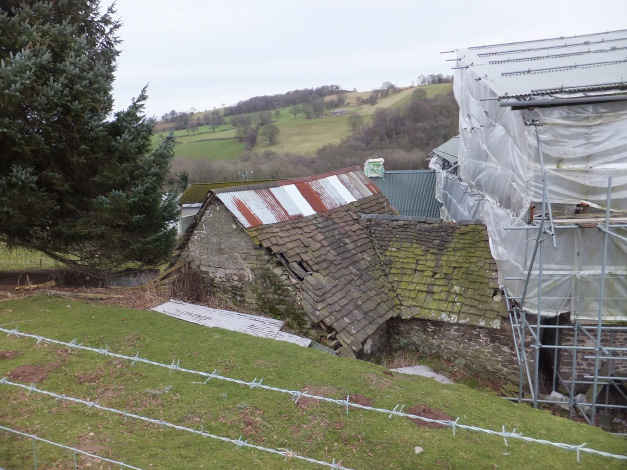
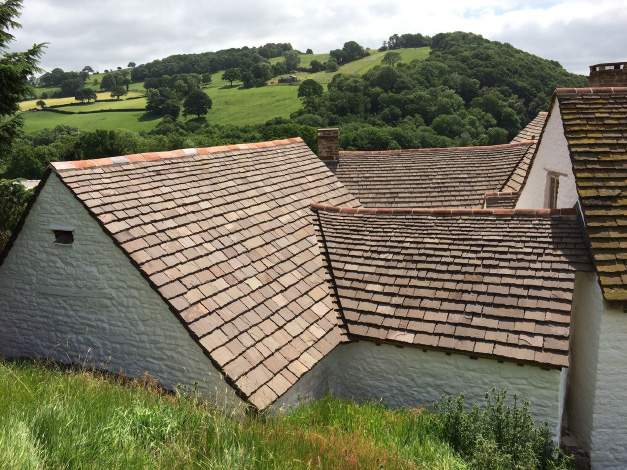
Wildwood Ecology supported the extensive restoration of Llwyn Celyn, a Grade I listed medieval hall house near Abergavenny, Monmouthshire, recognised by Cadw as one of Wales’s finest medieval hall houses. The project involved detailed restoration of the main house and associated agricultural buildings, including converting historic barns into accommodation and visitor facilities. Initial ecological surveys in 2013 revealed seven bat species, including lesser horseshoe, brown long-eared, and Natterer’s bats, highlighting significant ecological considerations.
Following comprehensive surveys and ecological assessments, planning permission was secured in 2016, and a bat mitigation licence was approved by Natural Resources Wales (NRW) in early 2017.
Challenge
The project faced numerous ecological and practical challenges, notably the severely deteriorated condition of the main building, which had been protected by emergency scaffolding since the 1990s. NRW’s regulatory complexities and Covid-19 restrictions significantly impacted communication, site access, and monitoring.
Additional complexities involved encouraging bats, particularly the rare lesser horseshoe species, to adopt new specially created roosting spaces away from restoration activities in the main farmhouse.

Approach
Wildwood Ecology developed a sophisticated ecological mitigation strategy informed by detailed solar calculations. These calculations demonstrated that the new ‘Cider House’ roost provided optimal conditions for lesser horseshoe bats. Dedicated roost spaces with thermal and acoustic insulation were created, featuring a specially designed bat access vent and internal baffling to optimize habitat suitability.
An innovative temporary exclusion approach successfully encouraged lesser horseshoe bats to adopt these new roosts, using carefully designed access points and controlled nightly procedures over three consecutive evenings. Collaboration with The Landmark Trust, John Goom Architects, and I.J. Preece & Sons contractors, alongside proactive communication with NRW, ensured conservation goals were effectively balanced with heritage restoration requirements.
Outcome
The careful ecological management resulted in exceptional outcomes, both environmentally and historically. Bat populations increased dramatically, with lesser horseshoe bats numbers rising from 11 individuals in 2013 to 66 by Autumn 2019, and brown long-eared bats increasing from 4 to 14 in the same period. Monitoring was temporarily halted in 2020 due to Covid-19 restrictions but recommenced in 2021.
The restoration was delivered with significant sustainability measures, including a locally sourced 85-tonne stone roof, biological waste treatment, solar arrays, and a wood-pellet boiler for green energy supply. Ecological enhancements such as extensive native hedgerow planting, a traditional orchard, and handmade wooden tree guards further enriched site biodiversity.
Llwyn Celyn now provides exemplar bat habitats, with biodiversity significantly enhanced through habitat creation and ongoing management. Boundary hedgerows planted with native species enhance connectivity, and features provided for birds and bats have resulted in no net biodiversity loss. A ten-year ecological management plan (2018-2028) secures ongoing site conservation.
The Landmark Trust acknowledged the real and substantial challenges of this project, including the complex ecological considerations. Total ecological services cost approximately £93,000, equivalent to just 2.3% of the overall £4M restoration budget. Savings were achieved through volunteer contributions, particularly in habitat planting activities.
The project received prestigious recognition in 2019, winning Small Scale Mitigation Project of the Year Award, courtesy of the Chartered Institute of Ecology and Environmental Management (CIEEM). Llwyn Celyn’s transformation, from severe dilapidation to an outstanding example of sustainable restoration, demonstrates the exceptional value delivered through integrated ecological consultancy.
Experts in Ecology & Arboriculture
Ecology
- Ecological site assessments
- Biodiversity Net Gain
- Protected species surveys
- Protected species mitigation design and licence applications
- Habitat Regulations Assessment
- Ecological Clerk of Works
Arboriculture
- Tree surveys and arboricultural reports (British Standard BS5837:2012)
- Arboriculture Method Statements
- Arboriculture Clerk of Works
- Woodland and Parkland Management Plans
- Veteran and Ancient Tree Assessments