
Ecological Support for Redevelopment at Former RAF Yatesbury
Yatesbury, Wiltshire
Client:
Stonewood Partnerships
Location:
Yatesbury, Wiltshire
Services:
- Consultation and advisory services
- Preliminary Ecological Appraisal (PEA)
- Preliminary Roost Assessment (PRA)
- Reptile presence/absence survey
- Bat activity surveys
- Badger presence/absence surveys
- Biodiversity Net Gain (BNG) assessment
- European Protected Species Licence (EPSL) application
- Construction Environmental Management Plan (CEMP)
- Input into Landscape and Ecological Management Plan (LEMP)
Overview:
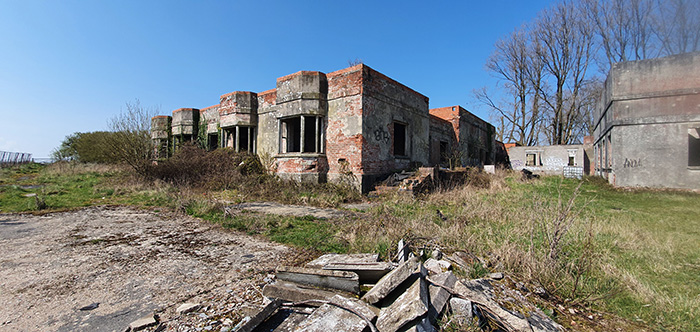
An initial Preliminary Ecological Appraisal (PEA) and Preliminary Roost Assessment (PRA) identified habitats suitable for protected species, including reptiles, badger, roosting bats, and nesting barn owl. As a result, targeted Phase 2 surveys were carried out over the summer, with efforts coordinated to minimise site visits and reduce the carbon footprint. These surveys informed the planning process and helped guide the ecological mitigation strategy, including reptile translocation and a European Protected Species Licence (EPSL) application for works affecting bat roosts.

Challenge
In parallel, the evolving landscape design, influenced by changing drainage and archaeological constraints, required repeated updates to the Biodiversity Net Gain (BNG) assessment to reflect each iteration of the plans.
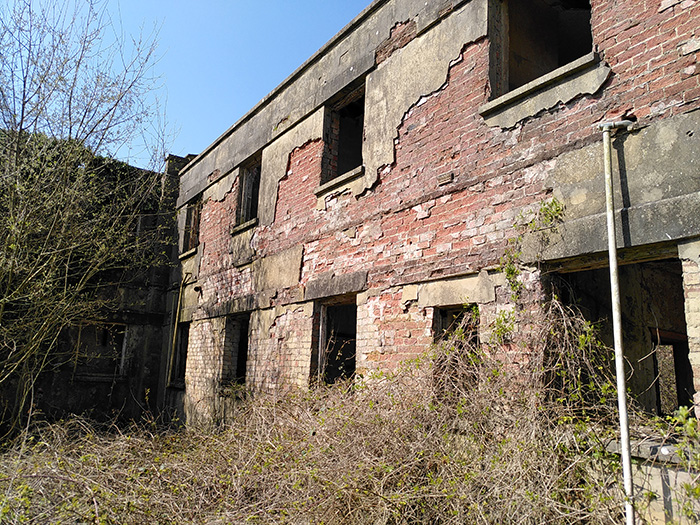
Further challenges included the confirmed presence of day and night bat roosts for common pipistrelle, soprano pipistrelle, and brown long-eared bats. A European Protected Species Licence (EPSL) will be required post-planning to permit works affecting these roosts. In addition, the site supports foraging and commuting bats along existing treelines and scrub, necessitating a sensitive lighting strategy to avoid disrupting established bat flight paths. Ahead of the construction phase, a comprehensive Construction Environmental Management Plan (CEMP) will be essential, and ecological input into the Landscape and Environmental Management Plan (LEMP) was also provided to support long-term biodiversity on site.
Approach
Reptile Surveys:
Given the extent and suitability of habitats across the 13-hectare site, hundreds of reptile mats (1m² roofing felt squares) were deployed in areas most likely to support reptile populations. Once settled, the mats were checked regularly under suitable weather conditions. The method allowed ecologists to gather population data efficiently while minimising site disturbance.
Bat Surveys:
Nine dusk emergence surveys were carried out across multiple buildings, each requiring around five surveyors. COVID restrictions prevented dawn surveys, but dusk data—collected through direct observation and bat detectors—provided high-quality insights. Acoustic analysis identified species such as common pipistrelle, soprano pipistrelle, and brown long-eared bats. The surveys also identified key commuting and foraging routes, informing a mitigation strategy and future EPSL application.
Badger Surveys:
An active badger sett identified during the PEA was monitored using night-vision trail cameras and sticky sticks. This confirmed the sett’s use and allowed ecologists to map badger movement across the site. Several inactive setts were confirmed as disused, enabling the design to avoid the active sett and eliminate the need for a licence.
Findings from the desk study, PEA, and Phase 2 surveys were used to prepare an Ecological Impact Assessment (EcIA). A Biodiversity Net Gain (BNG) Assessment, using DEFRA Metric 3.0, was updated iteratively to reflect evolving site designs and to support planning submissions.
Outcome
Survey data supported a comprehensive planning submission, with ecological considerations fully addressed. This proactive approach meant no ecological objections were raised, and the application progressed without delay. As the planning process continues, Wildwood Ecology remains engaged, providing ongoing ecological support to ensure any emerging issues are resolved efficiently, and future requirements—such as licensing and construction-phase mitigation—are delivered seamlessly.
“Wildwood Ecology has supported Stonewood Group with some complex projects, which are always approached positively and proficiently. Their support and commitment exceed expectation, providing valued assistance both during and post planning. The team offers expert advice and continuous involvement which gives us confidence that we can deliver the best possible scheme, providing high quality biodiversity enhancements that benefits the environment and local community.”
— Holly Simkiss, Planning Manager, Stonewood Group
Experts in Ecology & Arboriculture
Ecology
- Ecological site assessments
- Biodiversity Net Gain
- Protected species surveys
- Protected species mitigation design and licence applications
- Habitat Regulations Assessment
- Ecological Clerk of Works
Arboriculture
- Tree surveys and arboricultural reports (British Standard BS5837:2012)
- Arboriculture Method Statements
- Arboriculture Clerk of Works
- Woodland and Parkland Management Plans
- Veteran and Ancient Tree Assessments