
Bat Licensing and Ecological Support for Cave Protection Works
Bacon Hole Cave, Gower Peninsula – National Trust (Wales)
Client:
National Trust (Wales)
Location:
Gower Peninsula, Swansea
Services:
- European Protected Species Licence (bats – hibernation roost)
- Ecological input to mitigation design (security grille)
- Stakeholder liaison (National Trust and Natural Resources Wales)
- Ecological Clerk of Works (ECoW)
Overview:
Wildwood Ecology supported the National Trust in protecting the nationally important Bacon Hole cave on the Gower Peninsula—an ecologically sensitive hibernation roost for bats and a site of significant archaeological interest, featuring Upper Palaeolithic cave art and historic inscriptions.
To prevent unauthorised access and safeguard these features, a security grille was proposed for installation within the cave. Although planning permission was not required, the site’s location within an Area of Outstanding Natural Beauty (AONB) and its importance for protected bat species required careful ecological consideration.
Wildwood Ecology provided specialist ecological support from summer 2024 through to successful installation of the grille in autumn 2025.
Challenge
The installation of the security grille required a European Protected Species licence from Natural Resources Wales (NRW). However, standard bat survey methods could not be undertaken due to significant site constraints.
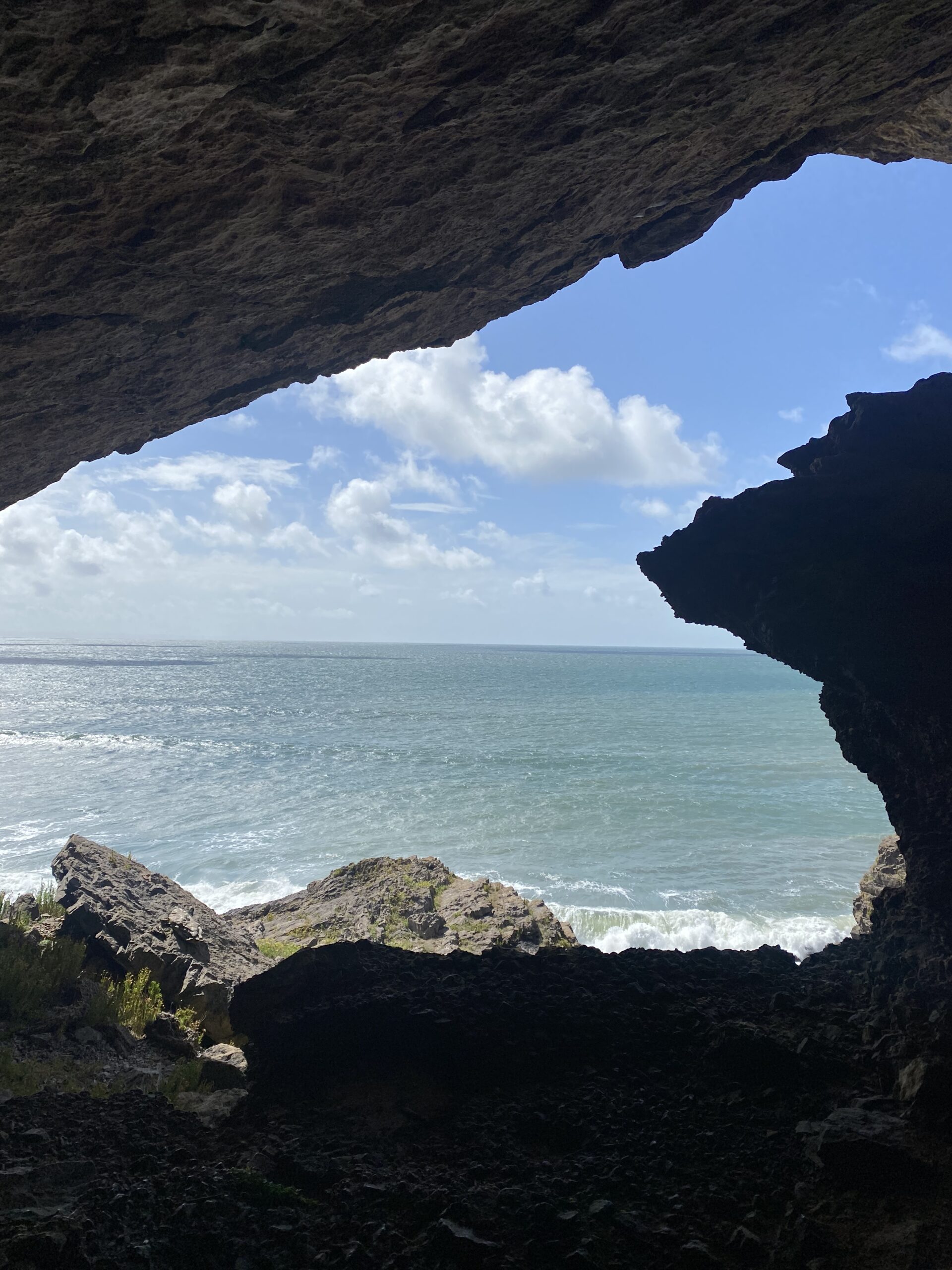
Static bat detectors could not be deployed within or around the cave entrance due to unrestricted public access, creating a high risk of damage or interference. Emergence surveys were also not feasible, as the cave entrance is located above the sea on steep, unstable cliffs, presenting unacceptable health and safety risks—particularly when leaving the site in darkness.
Despite these limitations, the cave is a well-established hibernation roost, with long-term monitoring data (since 1991) confirming use by multiple bat species, including greater and lesser horseshoe bats, brown long-eared bats, Myotis species, and pipistrelles.
A pre-licence site visit by a licensed ecologist confirmed the presence of a greater horseshoe bat using the main chamber during summer, with the potential for additional species to be present within the extensive crevice systems.
Wildwood Ecology therefore needed to develop a robust, evidence-led licensing strategy without relying on standard survey approaches.
Approach
With standard survey methods ruled out, Wildwood Ecology worked closely with Natural Resources Wales (NRW) to agree a pragmatic, evidence-led approach based on robust historic data. Long-term monitoring records from the local bat group were used to inform the licence application, with the precautionary assumption that the cave continued to support similar species assemblages during the summer months.
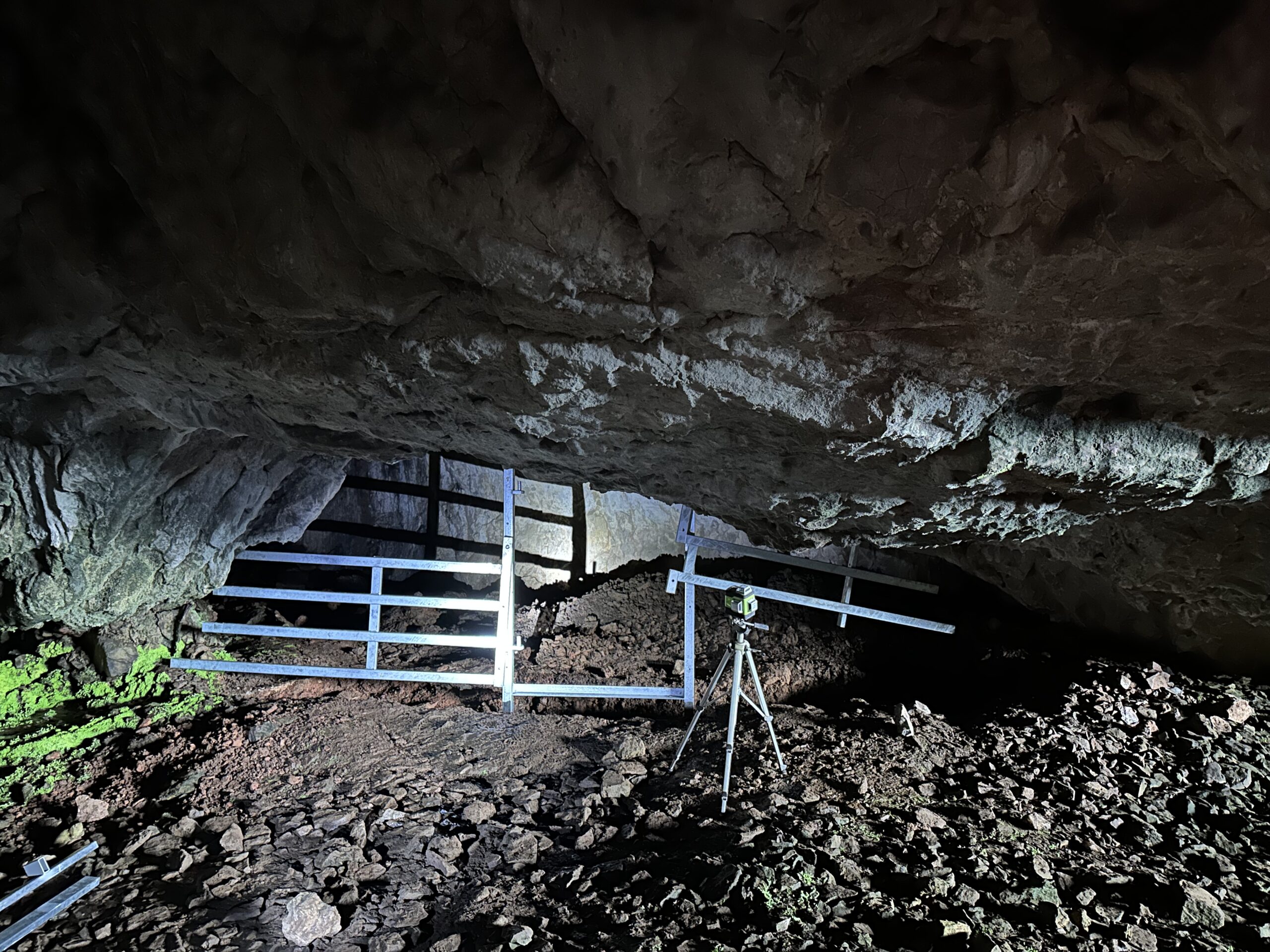
The design of the security grille was critical in balancing heritage protection with ecological function. Wildwood Ecology provided detailed input into the grille design, ensuring it maintained suitable access for bats through appropriate bar spacing (15cm), positioning, and material selection, while still preventing unauthorised human entry.
Due to the physical constraints of the cave entrance, the grille was installed within the rear chamber to protect the most sensitive areas of the site. This required careful coordination between ecologists, archaeologists, and specialist access contractors.
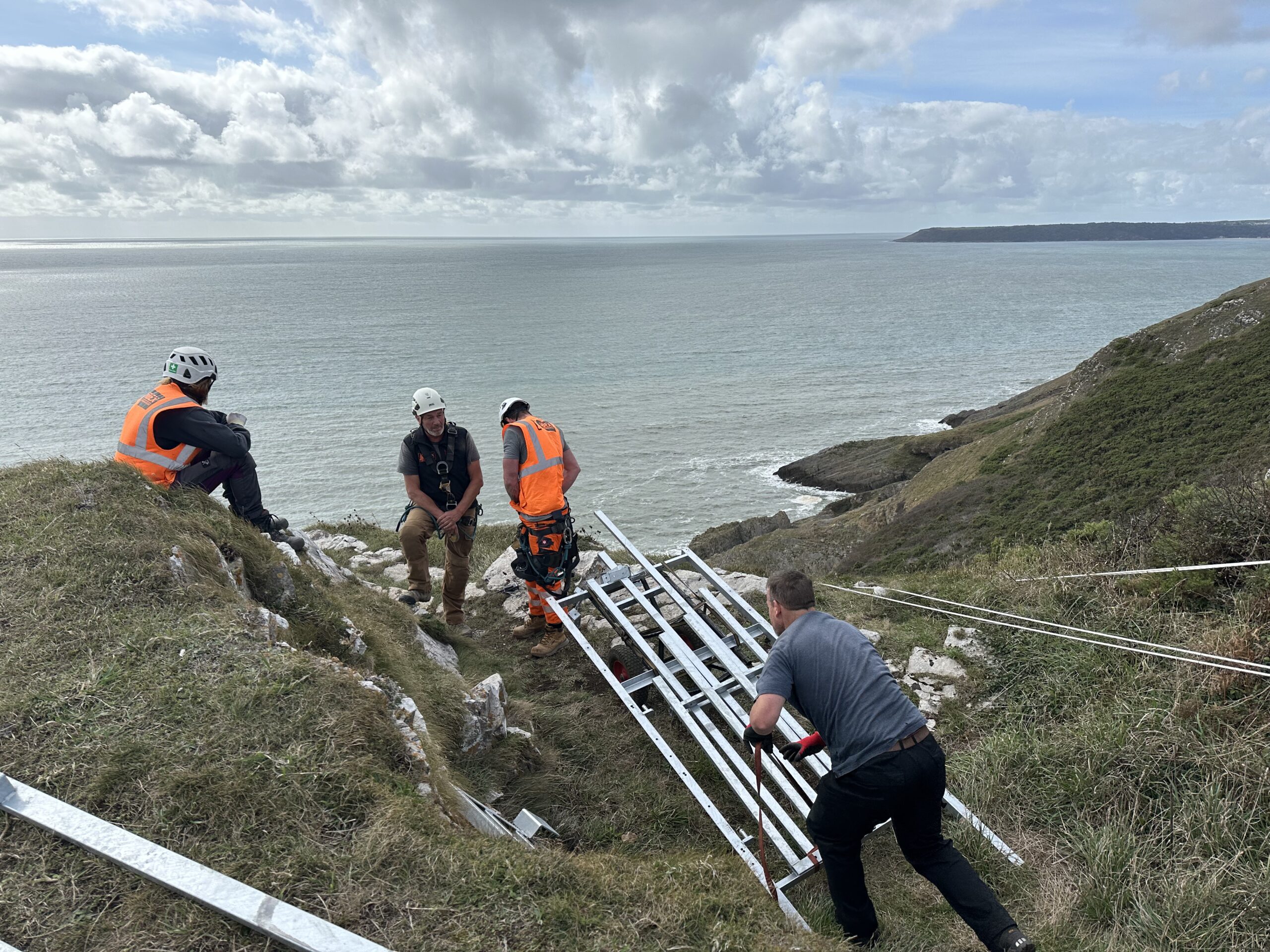
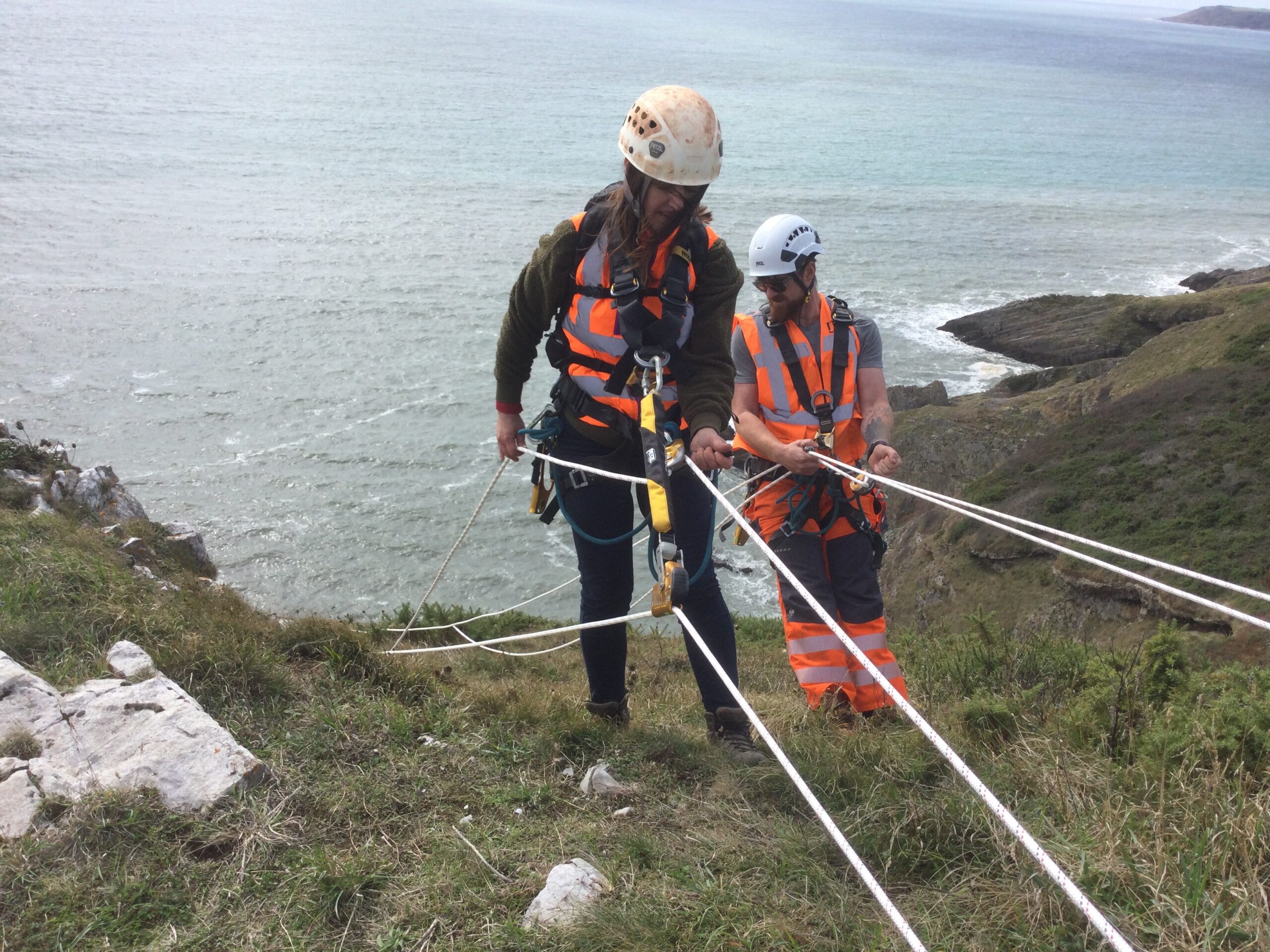
All works were undertaken under ecological supervision. A toolbox talk was delivered prior to works, alongside a full inspection of the cave. To minimise disturbance, grille components were fabricated off-site and transported into position via rope access (abseiling), avoiding unnecessary activity within sensitive areas.
During installation, a greater horseshoe bat was observed roosting within the main chamber. Works were carefully managed to avoid disturbance, with continuous monitoring by the Ecological Clerk of Works (ECoW). The grille was installed over several days, with minor on-site adaptations to ensure an optimal fit and maintain bat access. A lockable access point was also incorporated to allow ongoing monitoring by licensed bat group volunteers.

Outcome
The installation of the security grille successfully balanced the protection of nationally important archaeological features with the conservation of a significant bat hibernation roost. By restricting human access to the rear chamber, the works have reduced disturbance to hibernating bats while still allowing continued use of the cave by multiple species.
Although access to the entire cave could not be prevented, the protection of the most sensitive areas provides a secure refuge for bats, particularly during the hibernation period.
Ongoing monitoring by local bat group volunteers has been maintained in agreement with NRW, avoiding the need for additional disturbance. Early results are encouraging, with 30 greater horseshoe bats recorded in the first winter following installation, including individuals using the protected rear chamber.
Wildwood Ecology will continue to provide advice if monitoring identifies any changes in bat usage or if modifications to the grille are required, ensuring the long-term success of both ecological and heritage outcomes.
Experts in Ecology
Ecology
- Ecological site assessments
- Biodiversity Net Gain
- Protected species surveys
- Protected species mitigation design and licence applications
- Habitat Regulations Assessment
- Ecological Clerk of Works