St Mary’s Church, Kempley
Client: English Heritage
Services provided: Preliminary Roost Assessment, Bat emergence surveys, Mitigaiton (bat) licence, Ecological Clerk of Works.
OVERVIEW:
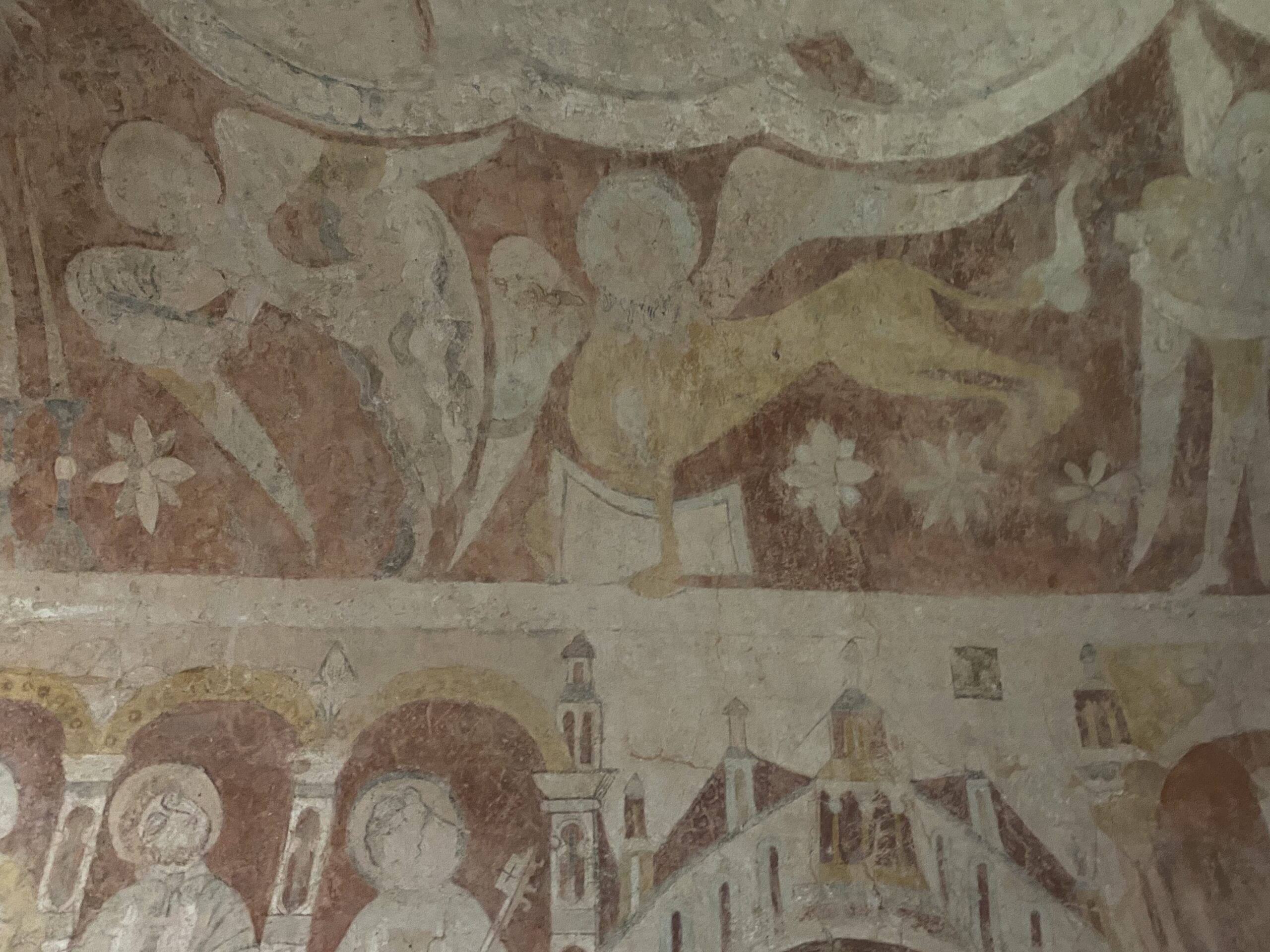
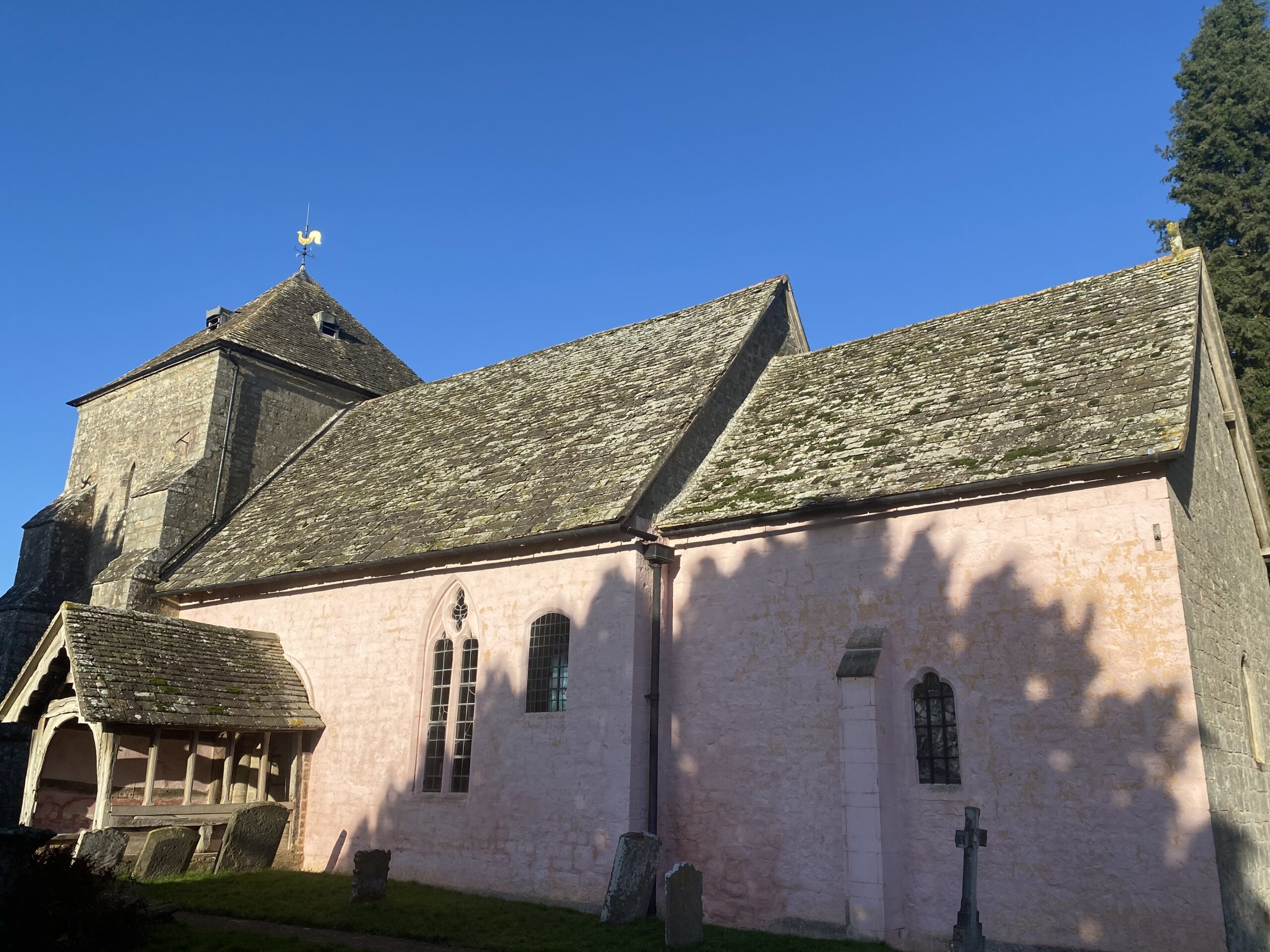
St Mary’s church is Grade I listed Norman church in the village of Kempley in Gloucestershire, which requires repairs to maintain its structural integrity. The repairs include back-propping of the first and second floors of the tower, repair of the weathervane to maintain its effectiveness against lighting strikes and roof maintenance to the nave. The church has the oldest timber roof and wooden door still in use in England and some of the best-preserved medieval wall paintings in Britain, all dating from the early 12th century. The wall paintings in the chancel are particularly rare, the most complete Romanesque frescos in northern Europe.
An internal Preliminary Roost Assessment (PRA) was undertaken by Wildwood Ecology in 2019. The survey found bat droppings in the nave and chancel, confirmed by DNA analysis as brown long-eared bat and lesser horseshoe bat.
Bat emergence surveys conducted in August and September 2021 confirmed the presence of common pipistrelle, soprano pipistrelle, and Natterer’s bats. Day roosts of small numbers of common pipistrelle (1 bat), soprano pipistrelle (2 bats), and Natterer’s (2 bats) were confirmed.
The confirmation of bats roosting in the church meant that a European Protected Species Licence (EPSL) was needed for the works to be undertaken.
CHALLENGE:
The challenge for the team was applying for the EPSL. In order to apply for a EPSL, Natural England require evidence of planning consent, such as planning permission and listed building permission, or scheduled monument and faculty consent to ensure the works are authorised as appropriate. Although the church is Grade I listed, no permissions were required for the works and therefore a suitable solution had to be sought and negotiated with Natural England for the licence to be issued.
APPROACH:
Discussions were held with English Heritage to determine the full scale of the works, a timeline of works and who would provide consent for the works in lieu of the usual permissions. Once the information was gathered, a EPSL was applied for to Natural England. As the licence application did not meet the full requirements because planning consent was not required, the licensed ecologist conducted a review of the licence application and the works with the Natural England adviser.
OUTCOME:
Due to the nature of the works, the need to preserve a valuable heritage building, and the fact the roosts that were to be affected would be re-instated after works, Natural England granted the licence application.
The proposed avoidance and mitigation measures would ensure no roosts would be lost as a result of the works and the favourable conservation status of the species concerned would not be adversely affected. One bat box will be installed on a tree within the grounds of the church prior to the commencement of works.
The works will be conducted in 2023.